

The first thousand steps with practical guidance, confidence, and pilgrim rhythm
Personal Camino story: fear, first villages, and learning to measure a long pilgrimage in water breaks instead of panic—Camino de Santiago narrative. What changed by noon with
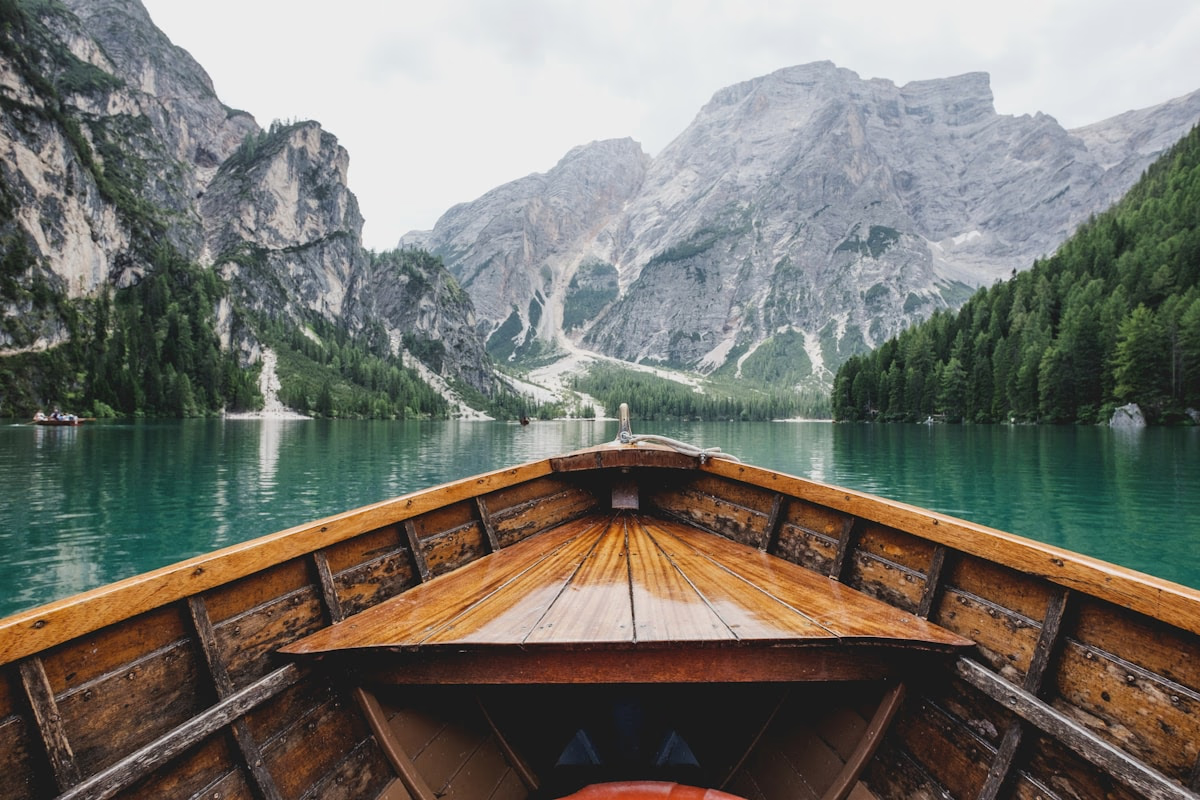
What changed by noon with practical guidance, confidence, and pilgrim rhythm
Key moment: I thought readiness would feel like a green light in my chest—a clear signal that I belonged on this path. Instead, readiness felt like mild nausea and an obsession with whether I had packed enough blister pads. The first thousand steps of my Camino were not heroic; they were awkward, scented with sunscreen I had applied too generously, and loud with the internal critic who catalogued every reason I should have stayed home.

Three moments that changed the day
Doubt walked beside me through the first village. I compared my pack to everyone else’s, as if nylon volume were a moral scorecard. I smiled at strangers too eagerly, then worried I seemed desperate. Pilgrimage strips you slowly of performed competence; the trail is interested in your honesty, not your LinkedIn summary.
By midday, sweat and silence had replaced most of my motivational speeches. My thighs knew something my anxious mind refused to admit: I could do this imperfectly and still move forward. I stopped asking “can I finish?”—a question too large to answer in hour one—and started asking “can I walk to the next fountain without being cruel to myself?” That question had edges I could actually touch.
Lunch happened at a plastic table under an awning. I understood why pilgrims talk about food as theology: bread tasted like patience, fruit like kindness from soil I would never farm. I watched an older walker wrap her ankles with the focus of a jeweller. I envied her calm until I realised calm is often learned pain, smoothed by repetition.
What stayed with me after sunset
The mountains did not ask for my résumé or my beliefs stated in full sentences. They asked for the next step, then another, then the willingness to stop when a hotspot demanded attention. Faith, doubt, love, fear—all of it had to fit inside my stride or be carried later. Some feelings I stored in my chest like wet laundry; others I laid out in the sun of conversation with someone whose name I never learned.
When evening came, I did not feel transformed. I felt tired in a way that resembled truth. I rubbed my feet and listened to languages I could not speak blend into a single sound of human effort relaxing. The first thousand steps had not made me wise; they had made me slightly quieter inside, as if some noisy courtroom in my head had adjourned for dinner.
If you are standing where I stood—pack heavy, heart light and heavy at once—know that beginning before you feel ready is a kind of devotion. The Camino does not require you to be sure. It requires you to be present enough to take the next step, and sometimes that presence is the first miracle you notice.
The Camino rarely shouts; it repeats gentle truths until you listen.
Turning point on the route
This section keeps narrative structure clear while supporting TOC generation on the frontend.
What I carried forward
This section keeps narrative structure clear while supporting TOC generation on the frontend.